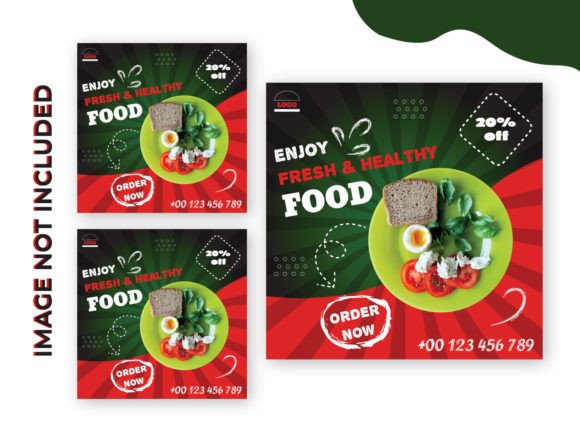
Instant Impact: Creating Ads with a Food Social Media Template
Scrolling through Instagram or Facebook, you know the feeling. A vibrant, mouth-watering food photo stops your thumb mid-scroll. The lighting is perfect, the composition is appetizing, but what truly seals the deal is the clean, professional text overlay announcing a daily special or a grand opening. This seamless blend of imagery and design doesn't happen by accident. For many busy restaurants, cafes, and food bloggers, the secret is a high-quality, easy-to-use design asset. A well-crafted Food Social Media Ad Template acts as a foundational blueprint, removing the guesswork from creating scroll-stopping content that actually converts.
More Than a Pretty Picture: The Anatomy of an Effective Template
At its core, a Food Social Media Ad Template is a pre-designed layout in a vector format like EPS file format, typically built for Adobe Illustrator CC version. This isn't just a static JPEG. It's a layered, editable file designed for customization. The RGB color mode ensures colors pop on any digital screen, from a smartphone to a desktop monitor. What sets a professional template apart is its structure. Elements like text blocks, image placeholders, and decorative graphics are organized into distinct layers, allowing for intuitive editing. This structure is key to maintaining visual consistency across a series of ads, ensuring your brand looks cohesive whether you're promoting a new menu item or a weekend brunch special.
The real value lies in its practicality. You're not starting from a blank canvas. Instead, you have a framework built on design principles—balanced composition, strategic use of negative space, and typography that guides the viewer's eye. This allows a small business owner or a content creator to produce professional presentation materials without needing a degree in graphic design. The template handles the heavy lifting of layout and aesthetic harmony, freeing you to focus on your unique message and stunning food photography.
From Download to Published Post: A Practical Walkthrough
Getting started is straightforward, even if you're not an Illustrator expert. After downloading the template, the process is about focused customization. First, you'll want to handle the typography. A good template will suggest or include links to the premium font used. Your first step is to download and install that typeface on your system. This is a non-negotiable step for brand identity, as using the correct font ensures your ad matches the designer's intent and maintains its professional look.
Once the fonts are installed, you can click directly on the text layers in Illustrator. The text becomes editable, allowing you to replace the placeholder copy with your own compelling message. This is where you inject your brand's voice. Next, the image. Templates often include a placeholder shape. Simply click on it, use the "Place" function (File > Place) to relink it to your high-resolution food photo, and save. The template is designed to crop or mask your image perfectly into the designated space.
A common question is about manipulating the design elements. If you want to move a decorative line, change the color of a banner, or adjust a shape, you may need to ungroup the layers. The shortcut shift+ctrl+g (or Shift+Cmd+G on a Mac) is your best friend here. This action breaks apart grouped objects, giving you granular control over every single element. This easy to edit philosophy is what transforms a generic template into a bespoke piece of your brand identity.
Strategic Applications for Your Food Brand
The utility of a versatile template extends far beyond a single Instagram post. It's a cornerstone for building a recognizable brand across multiple touchpoints. For social media graphics, you can use it to create a consistent series of ads for weekly specials, happy hours, or seasonal menus. The same design language can be adapted for your website's homepage banner, a blog post header, or even an email newsletter graphic, ensuring a unified look across all digital platforms.
Think physically, too. A beautifully designed ad template can be the starting point for print materials. With minor adjustments for bleed and resolution, the layout can inspire packaging design for takeaway bags, posters for in-store promotions, or invitations for a tasting event. For entrepreneurs selling digital products like recipe e-books or meal plans, the template provides a ready-made framework for editorial layouts and cover designs. This adaptability makes it a powerful design asset for any creative project in the culinary space.
Making the Template Your Own: Design Tips and Considerations
While the template provides the structure, your input creates the impact. Start by choosing imagery that tells a story. A close-up of a sizzling burger or a serene overhead shot of a latte art can set a completely different tone. Your photo is the hero; the template's typography and graphics are the supporting cast. When editing text, be concise. Social media ads thrive on clear, action-oriented language: "Order Now," "Book a Table," or "Today's Special."
Consider the font pairing within the template. Often, a display font is used for the main headline to grab attention, while a clean sans serif font or serif font is used for body text to ensure readability. Respect this hierarchy. If you change the headline font, ensure the body text still complements it. Always test your final design at the size it will be viewed. A layout that looks great on your 27-inch monitor might have text that's too small to read on a phone screen. This attention to detail is what elevates your content from amateur to professional, boosting audience engagement and building brand recognition.
Finally, remember that while the template file is yours to use, the fonts and any included stock imagery (which are not included in the download) have their own licensing. If you plan to use the design for commercial purposes—which most businesses do—it's your responsibility to ensure you have the proper rights for all assets. This due diligence protects your business and ensures your marketing is built on a solid, legal foundation. By leveraging a thoughtfully designed template, you equip yourself with a tool that saves time, ensures quality, and empowers you to communicate your culinary passion effectively to the world.