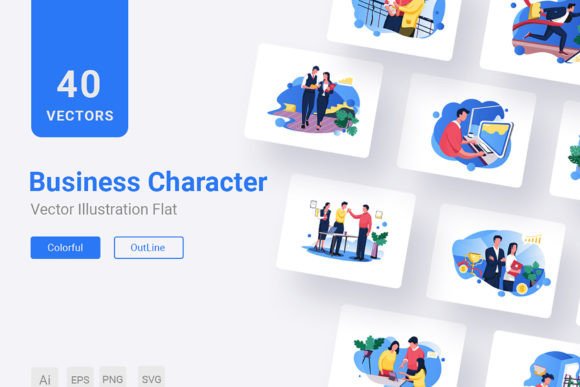
Business Character Flat Illustration: Bringing Personality to Your Brand
When you're building a brand, website, or marketing campaign, there's always that one nagging question: how do you make it feel human? Stock photos can feel generic, custom photography eats up budgets, and abstract graphics sometimes fail to connect with real people. That's where character illustrations step in — and specifically, why Business Character Flat Illustration has become such a popular resource among designers, entrepreneurs, and content creators who want their projects to feel approachable, modern, and memorable.
This particular collection offers 80 unique vector illustrations designed specifically for web and mobile environments. Each character is crafted in a flat design style — clean lines, bold shapes, minimal shading — which means they integrate seamlessly into contemporary digital layouts without looking dated or overly complex. If you've ever struggled to find visuals that match the tone of a startup landing page, an app interface, or a social media campaign, this kind of asset can genuinely change how you approach visual storytelling.
Why Flat Character Illustrations Work So Well for Modern Design
Flat design isn't just a trend that peaked in 2014 and faded away. It's proven to be one of the most functional visual styles for digital environments. The reason is straightforward: flat illustrations load quickly, scale cleanly across screen sizes, and don't compete with text for attention. They support your message rather than overwhelming it.
Character illustrations add another layer entirely. Instead of presenting your audience with faceless icons or abstract shapes, you're showing them people — professionals collaborating, entrepreneurs brainstorming, customers interacting with products. This human element builds trust. A visitor landing on your homepage and seeing a friendly character illustration immediately gets the sense that real people are behind the brand, not just a corporate logo and a sales pitch.
The flat style specifically keeps things versatile. You won't find hyper-realistic details that clash with minimalist UI designs or overly cartoonish features that feel juvenile. These illustrations sit in that sweet spot: professional enough for a fintech startup, friendly enough for a wellness brand, and clean enough for a SaaS dashboard.
Practical Applications Across Every Type of Project
One of the strongest advantages of a collection like this is sheer versatility. Here's where designers and business owners typically put these kinds of assets to work:
- Website hero sections and landing pages — Replace generic stock imagery with characters that represent your actual audience or team.
- Mobile app onboarding screens — Guide users through setup flows with friendly illustrated figures pointing the way.
- Social media graphics — Stand out in crowded feeds with custom-styled characters that reinforce your brand palette.
- Blog post headers — Give each article a visual anchor that readers associate with your content style.
- Email marketing templates — Add warmth and personality to newsletters without relying on expensive photo shoots.
- Pitch decks and presentations — Illustrate concepts like teamwork, growth, and innovation without resorting to overused stock metaphors.
- Packaging and print materials — Use scalable vectors on brochures, flyers, and product inserts at any resolution.
- Merchandise and branded swag — T-shirts, stickers, tote bags — flat illustrations reproduce beautifully on physical products.
- Digital products and courses — Course creators and ebook authors can use character illustrations to make educational content feel less intimidating.
Because every file comes in AI, EPS, SVG, and PNG formats at 4000x4000 pixels, you're not locked into a single workflow. Whether you're working in Adobe Illustrator, Figma, Canva, or even pulling assets directly into a CMS, the files adapt to however you build.
Customization That Actually Matters
A collection of 80 illustrations is only useful if you can make them your own. This is where vector-based assets genuinely outperform raster graphics. Every element in these files — shapes, colors, text — is fully editable. Want to change a character's shirt color to match your brand hex code? Done in seconds. Need to resize an illustration for a billboard without losing sharpness? Vectors handle that effortlessly.
The collection includes both colorful and outline styles, which opens up even more creative possibilities. Use the full-color versions for vibrant marketing materials and switch to outline versions when you need something subtler — like watermark-style backgrounds or minimalist icon sets derived from the characters.
Text editability is another detail that often gets overlooked. Many illustration packs rasterize text or lock it into non-editable layers, forcing you to rebuild titles or labels from scratch. Here, the text layers remain fully editable, provided you install the recommended fonts first. It's a small step that saves significant time, especially when you're localizing content for different markets or updating campaign messaging on the fly.
Building Visual Consistency Across Your Brand
One of the hardest parts of maintaining a brand identity is keeping visuals consistent across dozens of touchpoints. Your Instagram posts should feel like they belong to the same company as your website, which should feel connected to your email templates and printed materials. When you're pulling images from different stock sources every time, that consistency breaks down fast.
Working from a unified illustration set solves this problem structurally. All 80 characters share the same design language — proportions, line weights, color handling, and stylistic approach. When you use three or four of them across your homepage, your about page, and your social media profiles, the visual thread is unmistakable. Your audience starts recognizing your aesthetic before they even read your name.
This kind of visual coherence is especially valuable for small businesses and startups that haven't yet invested in a full brand guidelines document. By committing to a single illustration style, you're essentially building a de facto visual system that holds everything together.
Choosing the Right Illustrations for Your Audience
Not every character will suit every project, and that's worth thinking through before you start dropping illustrations into your designs. Consider who your audience actually is. A B2B software company targeting enterprise decision-makers might gravitate toward characters in professional settings — boardrooms, presentations, laptop screens. A lifestyle brand aimed at millennials might prefer characters in casual, everyday scenarios — coffee shops, parks, home offices.
Pay attention to diversity and representation, too. A good illustration set should offer characters across different appearances, activities, and contexts so that your audience feels seen. If your customer base spans multiple demographics, choose illustrations that reflect that range rather than defaulting to a single look.
Color customization becomes especially important here. Even if the default palette doesn't perfectly match your brand, spending ten minutes adjusting colors in Illustrator ensures every character feels intentionally integrated rather than borrowed from someone else's design kit.
Licensing and Long-Term Value
Before using any illustration commercially, always review the licensing terms. Most premium illustration collections — including this one — include commercial use rights, but it's worth confirming whether the license covers your specific use case. Can you use the characters in a product you sell? On client work? In print runs exceeding a certain quantity? These details matter, and checking them upfront prevents headaches later.
From a value perspective, 80 unique vector illustrations for the price of a single custom illustration commission is genuinely compelling. Custom character design can cost hundreds per figure, and turnaround times stretch into weeks. A well-curated collection gives you immediate creative fuel for months of projects — social media content alone could draw from this set for a full quarter without repeating a single illustration.
The key is treating these assets as a foundation rather than a finished product. The best results come when you customize, combine, and adapt the illustrations to fit your specific brand voice. Change the colors, crop creatively, layer them with typography, place them in contexts that tell your story. That's when a stock illustration collection transforms from a download into a genuine design asset that strengthens every project it touches.